Gdańsk is a safe city to visit. That is the honest headline, but a safety guide that stops there is not much use. The real risks for visitors are specific and avoidable: pickpockets in crowds, unlicensed taxis, overpriced bar bills and drink spiking, and a sea that is colder and stronger than it looks. Below are the official crime numbers, read without spin, and the practical rules locals actually follow.
| Recorded crime, 2024 | 31.65 per 1,000 residents (Poland 20.57) |
|---|---|
| Crimes against life and health | 0.48 per 1,000 residents |
| Main risk for visitors | Petty theft in crowds, stations and on public transport |
| Taxis | Licensed only: company name, phone number and rate card on the car |
| Emergency number | 112 (police 997, fire 998, ambulance 999) |
| Swimming | Guarded beaches in the summer season only; white flag = swimming allowed |
| Night bus from the airport | N3, roughly 23:00 to 04:00 |
Key takeaways
- Violent crime is rare; property crime per resident is higher than in Warsaw or Kraków (GUS, 2024)
- Pickpockets work Długa, the Christmas market, St Dominic's Fair, the main station and crowded trains
- Use licensed taxis from ranks or company apps; check the company name and rate card
- Watch your drink and check your bill in bars and clubs
- Swim only at guarded beaches in summer; the Baltic has rip currents
- 112 works from any phone
In this guide
How much crime is there in Gdańsk?
We prefer official numbers to crowd-sourced "safety scores", which are opinion surveys. Statistics Poland (GUS) publishes the number of crimes recorded by the police per 1,000 residents for every city. For 2024, the latest year available:
| Area | All offences | Against property | Against life and health |
|---|---|---|---|
| Gdańsk (city) | 31.65 | 22.45 | 0.48 |
| Kraków (city) | 25.46 | 14.84 | 0.45 |
| Warsaw (city) | 26.57 | 15.54 | 0.31 |
| Poland | 20.57 | 9.86 | 0.35 |
Read honestly, this says two things. Serious violence is rare: under half a recorded case of assault or other crime against life and health per 1,000 residents a year. But property crime is higher in Gdańsk than in Warsaw or Kraków per resident. Theft, burglary, car crime and damage to property make up most of the total. The figures are per resident and do not count the millions of visitors who pass through, and they cover the whole city, not just the centre, but they point at the right thing to watch: your phone, your wallet and your bike, not your personal safety.
The UK Foreign Office's travel advice for Poland says the same in plainer words: "Be alert to street crime and petty theft. Criminals view foreigners as easy targets."
Where do pickpockets work?
Where the crowds are. In Gdańsk that means:
- Długa and the Long Market, the main tourist street, especially around the Neptune Fountain and the town hall at peak times.
- The Christmas market (20 November to 23 December 2026) and St Dominic's Fair in late July and August, when the Main Town is packed. See our St Dominic's Fair guide.
- Gdańsk Główny station, the SKM commuter trains and crowded trams and buses, particularly to the beaches on summer weekends.
- Sopot's Monte Cassino street and the pier on summer evenings.
The basics work: phone in a front or zipped pocket, not on the café table; bag closed and in front of you in crowds; be careful after using an ATM. If something is stolen, report it at a police station; you will need the report for insurance.
Are taxis in Gdańsk safe?
Licensed taxis are, and the trick is to use only those. The UK Foreign Office advises against unofficial taxis and notes that official ones display the company name and phone number and a rate card; a car with a crest but no company name is not an official taxi. It also warns that passengers have been attacked, including sexual assaults, in unofficial taxis and in cars booked through ride-share apps.
- Take taxis from official ranks or order through a licensed taxi company's own app or phone line. At the airport, the airport names Neptun Taxi as the company it works with.
- Check the company name and rate card on the car, and agree a fixed price before you set off, or make sure the meter is running.
- Do not accept a ride from someone who approaches you in the arrivals hall or outside a club.
Public transport is a safe alternative. From the airport, bus 210 runs to the main station in about 40 minutes for 4.80 zł, and the N3 night bus runs roughly 23:00 to 04:00. Our getting around guide covers trams, buses and the SKM.
Is Gdańsk safe at night?
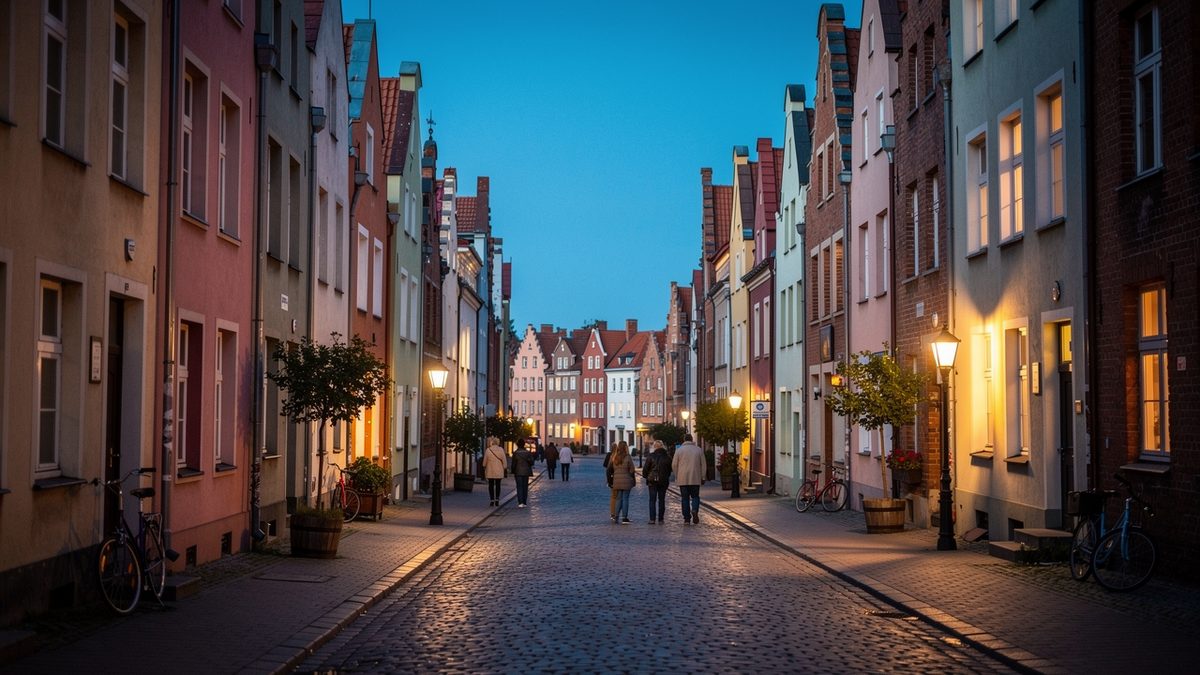
The Main Town is busy and well lit in the evening, and walking between Długa, the waterfront and the station after dinner is normal. Most problems at night involve alcohol. The Foreign Office's two specific warnings for Poland apply here too:
- Drink spiking: victims have been robbed in bars and clubs. Do not leave a drink unattended or accept one from a stranger.
- Bar bills: "Check your bill carefully when buying drinks in bars and nightclubs." Visitors have been overcharged when paying by card at the end of the night. Be wary of being invited to a bar by someone you have just met.
Avoid unlit parks and hills late at night, including the footpaths of Góra Gradowa above the station, which are a great viewpoint at sunset and poorly lit after dark. Our Gdańsk at night guide covers the best evening walks and bars.
Is the sea safe for swimming?
Swim only at a guarded beach during the summer bathing season. Lifeguards work at Gdańsk's main beaches, including Brzeźno, Jelitkowo and Stogi, typically from late June to the end of August; the city publishes the exact dates each year. Polish beaches use a flag system: a white flag means swimming is allowed, a red flag means it is forbidden, and no flag means there is no lifeguard on duty.
The Baltic looks calm but has rip currents, especially near breakwaters and piers, and the water is cold outside July and August. In hot spells, guarded bathing areas are sometimes closed because of blue-green algae (cyanobacteria) blooms; the State Sanitary Inspectorate's bathing-water service publishes closures. Do not swim after drinking. Our beaches guide compares the city's beaches.
What is the emergency number?
112 is the European emergency number and works in Poland from any phone, for police, ambulance and fire, with operators who can usually take calls in English. The national numbers also still work: 997 for police, 998 for the fire service and 999 for an ambulance. Save your accommodation's address in Polish on your phone, so you can read it out.
Is Gdańsk safe for solo and female travellers?
Gdańsk is a comfortable city to travel alone, including for women. The usual city rules apply: keep to lit, busy streets late at night, watch your drink, and use licensed taxis or public transport rather than accepting rides. The Foreign Office's warnings about unofficial taxis and ride-share cars, mentioned above, are the most relevant ones. Solo travellers who want to see Malbork, Hel or Stutthof without managing connections can join or book a tour; our day trips guide lists the public-transport options first.
Is Gdańsk safe for LGBTQ+ travellers?
Gdańsk is one of the more open cities in Poland. The facts: same-sex sexual activity is legal in Poland, but Polish law does not recognise same-sex marriages or civil partnerships. The UK Foreign Office lists Gdańsk and Sopot among the Polish cities with LGBT+ friendly venues, and notes that small towns and rural areas can be less tolerant. The City of Gdańsk adopted an equal-treatment policy in 2016. Public displays of affection draw more looks than in Western European capitals; hostility is uncommon in the centre.
Scams and money
The scams in Gdańsk are dull rather than dramatic: currency exchange booths with poor rates, card terminals that offer to charge you in your home currency (always choose złoty), and the bar overcharging described above. Fake amber is the main shopping trap; see our amber guide, and money in Gdańsk for cards, ATMs and exchange.
Frequently Asked Questions
Is Gdańsk safe for tourists?
Yes. Violent crime against visitors is rare. The main risk is petty theft in crowds: in 2024 Gdańsk recorded 22.45 property crimes per 1,000 residents, more than Warsaw or Kraków, against 0.48 crimes against life and health per 1,000. Watch your phone and wallet in busy places.
What is the crime rate in Gdańsk?
According to Statistics Poland (GUS), the police recorded 31.65 crimes per 1,000 residents in the city of Gdańsk in 2024, against 26.57 in Warsaw, 25.46 in Kraków and 20.57 for Poland as a whole. Most of the difference is property crime.
Are taxis safe in Gdańsk?
Licensed taxis are. Use official ranks or a licensed taxi company's own app or phone line, check that the car shows the company name and a rate card, and agree a fixed price or make sure the meter is on. Avoid anyone offering rides in the arrivals hall.
What is the emergency number in Poland?
112 is the European emergency number and works in Poland from any phone for police, ambulance and fire. The national numbers 997 (police), 998 (fire) and 999 (ambulance) also still work.
Is it safe to swim in the sea in Gdańsk?
Only at a guarded beach in the summer bathing season, when lifeguards are on duty at the main beaches such as Brzeźno, Jelitkowo and Stogi. A white flag means swimming is allowed and a red flag means it is forbidden. The Baltic has rip currents near breakwaters and piers.
Is Gdańsk safe for LGBTQ+ travellers?
Generally yes, by Polish standards. Same-sex relationships are legal but Polish law does not recognise same-sex marriages or civil partnerships. The UK Foreign Office lists Gdańsk and Sopot among the cities with LGBT+ friendly venues; smaller towns can be less tolerant.
Is Gdańsk safe at night?
The Main Town and the waterfront are busy and well lit in the evening. The main risks at night are drink spiking and overcharging in bars and clubs, so watch your drink and check your bill. Avoid unlit parks and hill paths late at night.